

Sleep Dentistry: Why Your Dentist May Be the Key to Better Sleep
Dentists spend their careers studying the anatomy of the mouth, jaw, tongue, bite, and airway.
Most people think of sleep apnea as a medical condition that belongs in a sleep clinic. They schedule an appointment with their physician, complete a sleep study, and often assume the next step is a CPAP machine.
What many people don’t realize is that their dentist may be one of the most important healthcare professionals involved in treating their condition.
Sleep dentistry has become a rapidly growing field that focuses on identifying and treating breathing disorders that occur during sleep. For millions of people with obstructive sleep apnea (OSA), a trained sleep dentist can provide an effective, comfortable alternative to traditional therapies while working alongside physicians to improve both sleep and long-term health.
What Is Sleep Dentistry?
Sleep dentistry is a specialized area of dental practice focused on diagnosing airway problems and treating sleep-related breathing disorders, particularly obstructive sleep apnea.
Rather than treating the sleep disorder itself, the dentist addresses one of its most common causes: the collapse of the airway during sleep.
Many dentists receive advanced training in dental sleep medicine, allowing them to work closely with sleep physicians, pulmonologists, primary care doctors, and other specialists as part of a patient’s treatment team.
Why Dentists Are Uniquely Qualified
Dentists spend their careers studying the anatomy of the mouth, jaw, tongue, bite, and airway. These structures play a major role in whether your airway remains open while you sleep.
During a routine dental examination, a sleep-trained dentist may notice:
A narrow airway
A recessed lower jaw
Teeth grinding or clenching
Tongue positioning issues
Signs of chronic mouth breathing
Wear patterns associated with sleep-disordered breathing
These observations often raise concerns long before a patient realizes they may have sleep apnea.
Many patients seek treatment only after years of poor sleep, daytime fatigue, or loud snoring. Sometimes the first healthcare provider to recognize the warning signs is their dentist.
A Comfortable Alternative for Many Patients
Continuous Positive Airway Pressure (CPAP) remains one of the most effective treatments for moderate to severe sleep apnea. However, not everyone is able to tolerate sleeping with a mask every night.
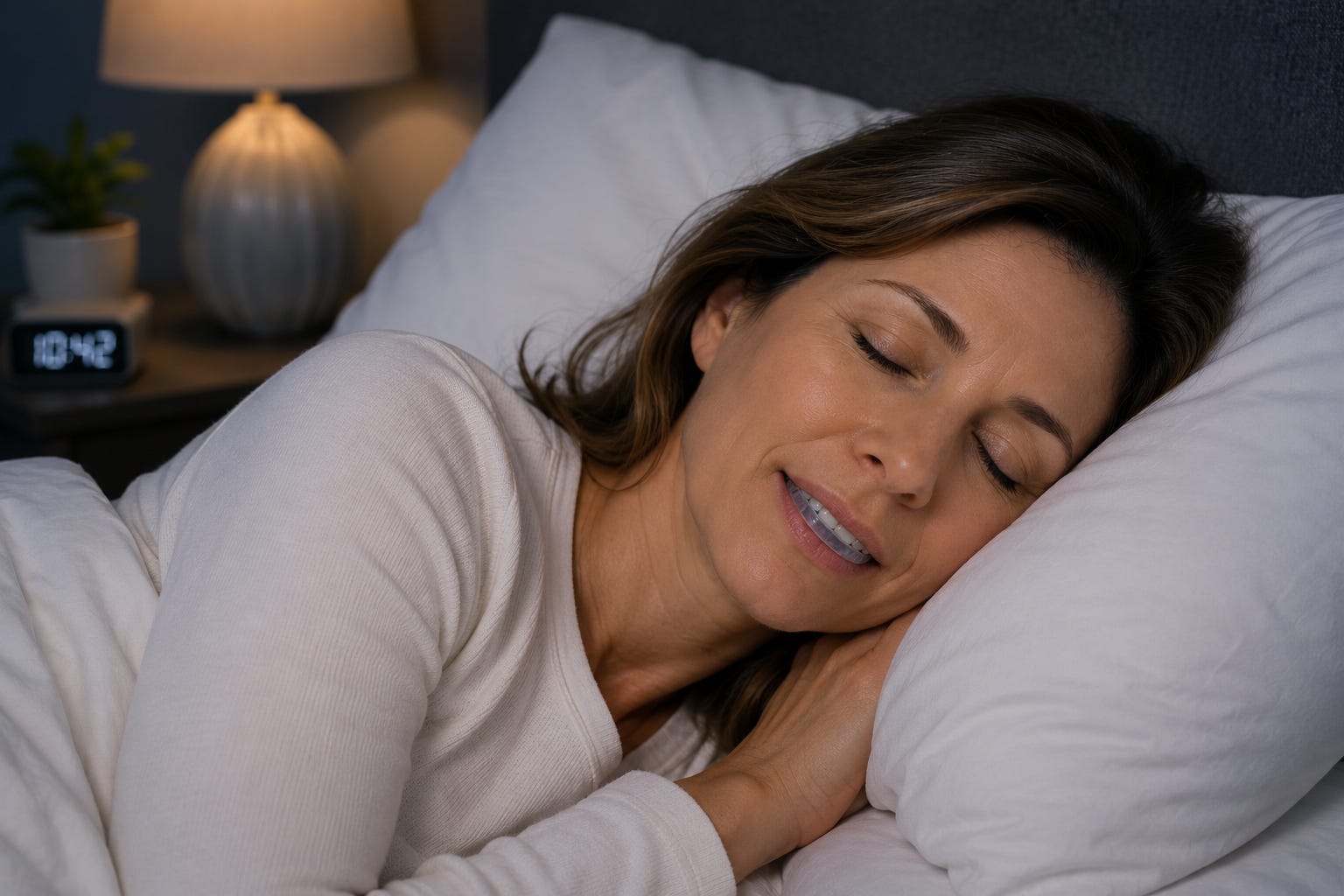
For many patients, an oral appliance prescribed by a qualified sleep dentist can be an excellent alternative.
These custom-made devices gently reposition the lower jaw while sleeping, helping keep the airway open and reducing breathing interruptions throughout the night.
Compared with CPAP, oral appliances are often:
Small and portable
Quiet
Easy to travel with
Comfortable for many patients
Simple to clean and maintain
For appropriate candidates, they can provide significant improvements in sleep quality while being much easier to use consistently.
Treatment Doesn’t End When the Appliance Is Delivered
One of the biggest misconceptions is that receiving an oral appliance marks the end of treatment.
In reality, it is only the beginning.
Finding the ideal jaw position often requires gradual adjustments over several weeks or months. Small changes can have a meaningful impact on breathing, comfort, and effectiveness.
This is where ongoing follow-up becomes extremely valuable.
Rather than relying only on how a patient feels, today’s sleep dentists increasingly use objective sleep monitoring to evaluate whether treatment is truly improving overnight breathing, oxygen levels, heart rate, and overall sleep quality.
Monitoring helps answer important questions such as are breathing interruptions decreasing? Or is oxygen remaining more stable?
This allows treatment decisions to be guided by real data instead of guesswork.
Sleep Apnea Affects More Than Sleep
Untreated sleep apnea has been associated with numerous health concerns, including:
High blood pressure
Heart disease
Stroke
Type 2 diabetes
Daytime fatigue
Memory and concentration problems
Depression and mood changes
Because these conditions develop gradually, many patients underestimate the importance of treating their sleep disorder.
Improving nighttime breathing is about far more than reducing snoring. It may contribute to better overall health and quality of life.
The Bottom Line
If you’ve been diagnosed with sleep apnea, or suspect you may have it, don’t overlook your dentist as part of your healthcare team.
A dentist trained in dental sleep medicine may be able to identify airway problems, provide a comfortable treatment option, and work with your physician to optimize your therapy over time.
The goal isn’t simply to stop snoring. It’s to help you breathe better, sleep more soundly, and wake up feeling more rested while protecting your long-term health.
As sleep dentistry continues to evolve, dentists are becoming an increasingly important part of helping patients achieve healthier nights and better days.